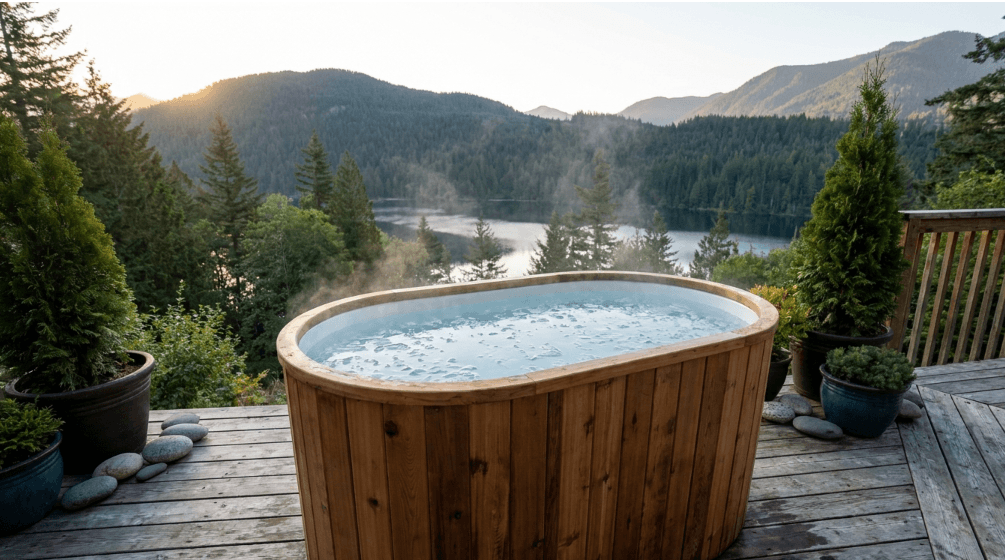
Some cold-plunge-capable tubs are built to double as a hot soak, and the heat source you pick, an electric heat pump or a wood-fired stove, changes how the whole small-space setup behaves. Electric heat pumps reach temperature faster and run with less manual effort, while wood-fired stoves need no electrical hookup and appeal to people who want a low-tech, off-grid option in a single footprint that serves both hot and cold use.
How does an electric heat pump tub actually work?
An electric unit uses a heat pump or resistive element to warm the water for a soak, and the same compressor loop, run in reverse or paired with a separate chiller, can chill the water for plunge use on other days. These systems typically need a dedicated 220 to 240-volt circuit, and manufacturers usually spec a specific breaker size, often in the 30 to 50 amp range, depending on the unit’s draw. Recovery time from a full soak temperature down to plunge-ready cold varies by model, but many owners simply run the tub cold most of the week and heat it occasionally rather than switching daily.
How does a wood-fired tub compare?
A wood-fired stove tub uses a firebox, either external or submerged, to heat water directly, with no electrical connection required at all beyond an optional small circulation pump. This appeals to sites without easy access to a 240-volt circuit, such as a detached corner of a property far from the main panel. The tradeoff is time and attention: a full heat cycle from cold takes two to four hours and needs someone to feed and monitor the fire, compared with the largely hands-off operation of an electric system. Left unheated, the same tub works fine as a manual cold plunge, cooled with ice or simply left to sit at ambient outdoor temperature.
How does startup time factor into a small-space routine?
For a household using a shared corner of the yard for both hot and cold sessions, startup time shapes how spontaneous the routine can be. An electric heat pump tub that reaches soaking temperature in under an hour fits easily into an evening after work, while a wood-fired tub’s two-to-four hour heat cycle usually means planning the soak earlier in the day or accepting that spontaneous use is less realistic. Neither is wrong, but it is worth being honest about which pace matches how the household actually lives before committing to one heat source over the other.
Which one fits a small footprint better?
Both heat sources can work in a tight space, but the practical constraints differ. An electric unit needs clearance for the heat pump or chiller housing and a nearby electrical run, while a wood-fired tub needs a safe clearance zone around the firebox for combustibles, plus somewhere dry to store wood. Neither footprint is dramatically larger than the other, but a wood-fired setup trades electrical infrastructure for a small storage and fire-safety requirement instead. A specialty retailer that lists both stove-heated and electric heat-pump tubs together makes side-by-side sizing easier; the current lineup at SweatDecks.com includes both categories with published dimensions and gallon capacities.
How do the two options compare on cost?
Electric heat-pump tubs generally carry a higher purchase price, often several thousand dollars more than a comparably sized wood-fired unit, because of the compressor, refrigerant loop, and control electronics involved. That gap is partly offset over time by the electrician’s fee a wood-fired install avoids, though most owners still want at least a small lighting circuit run to the site regardless of heat source. Running costs diverge too: electric units add a measurable amount to a power bill with regular use, while wood-fired tubs trade that for the cost and effort of sourcing firewood, which varies enormously by region and whether the wood is purchased or already on hand.
What does the evidence say about contrast therapy?
The appeal of a dual hot-and-cold tub usually comes down to contrast therapy, alternating heat and cold exposure. The research here is genuinely mixed rather than a clear endorsement. A 2025 PLoS One meta-analysis on cold-water immersion found associations with short-term mood benefits and reduced inflammatory markers, but effect sizes varied considerably across the pooled trials. A Frontiers in Physiology meta-analysis on post-exercise cold-water immersion found more consistent benefit for perceived fatigue than for measurable performance outcomes. It is also worth being direct about a real limitation: cold exposure done immediately after resistance training may blunt some of the strength and muscle-building adaptations that training is meant to produce, so athletes focused on hypertrophy sometimes separate their plunge sessions from lifting days rather than stacking them.
Which heat source should most buyers actually choose?
For a site with existing 240-volt service and a preference for minimal daily effort, an electric heat pump tub is the more practical choice. For a remote corner of a property, an off-grid cabin, or simply a preference for a wood fire ritual, a stove-heated tub used cold most of the week and heated occasionally is a reasonable alternative. Both can serve the same small footprint; the decision mostly comes down to available electrical infrastructure and how much hands-on fire tending someone actually wants.
Frequently Asked Questions
Can one tub really work as both a hot soak and a cold plunge?
Yes. Some wood-fired and electric heat-pump tubs are built to be used unheated as a plunge, then heated for a soak on a different day, though most owners who want to switch between hot and cold on the same day prefer two separate vessels.
How long does it take to heat a wood-fired tub?
A typical wood-fired stove tub takes roughly two to four hours to reach soaking temperature, depending on tub size, starting water temperature, and outdoor air temperature, compared with electric heat pump units that often reach the same range in under an hour.
Does an electric heat-pump tub need a special electrical circuit?
Most home units need a dedicated 220 to 240-volt circuit sized for the specific heat pump or chiller, which a licensed electrician should install with GFCI protection since the equipment sits near standing water.
Is contrast therapy, alternating hot and cold, actually backed by evidence?
The evidence is mixed and mostly short-term. Some studies show contrast bathing may modestly ease perceived soreness, while cold exposure specifically may blunt strength and muscle-building adaptations if done immediately after resistance training.
Which heat source is lower maintenance, electric or wood-fired?
Electric heat pump systems generally need less hands-on maintenance day to day, since there is no firebox to load or ash to clear, though the equipment itself is more complex and can be costlier to repair than a simple wood stove.
References
- Effects of cold-water immersion on health and wellbeing: A systematic review and meta-analysis, PLoS One, 2025. https://pubmed.ncbi.nlm.nih.gov/39879231/
- Effects of cold water immersion after exercise on fatigue recovery and exercise performance: meta analysis, Frontiers in Physiology, 2023. https://pubmed.ncbi.nlm.nih.gov/36744038/
- Cold-water immersion (cryotherapy) for preventing and treating muscle soreness after exercise, Cochrane Database of Systematic Reviews, 2012. https://pubmed.ncbi.nlm.nih.gov/22336838/